


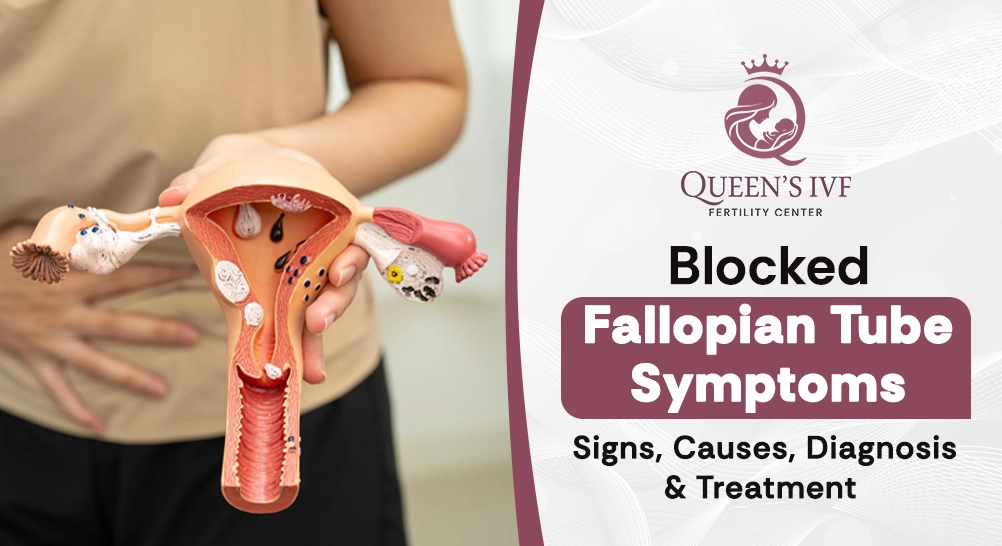
When one or both tubes become blocked, it can make it difficult for the egg and sperm to meet. In some women, there may be no clear symptoms, and the blockage is discovered only during a fertility check-up.
The good news is that tubal blockage can be diagnosed and, depending on its location and severity, may be treated through different approaches. Treatment may include medicines for an underlying infection, procedures to open certain blockages, surgery, or IVF.
If you are looking for the best IVF treatment center in Delhi, understanding the cause of infertility is the first step toward choosing the right treatment.
What Are Blocked Fallopian Tubes?
Fallopian tubes are two narrow tubes located between the ovaries and uterus. During ovulation, an egg travels from the ovary into a fallopian tube. Fertilisation usually happens inside the tube before the fertilised egg moves toward the uterus.
A tubal blockage can prevent the egg from travelling normally or stop sperm from reaching the egg.
The blockage may affect:
One fallopian tube
Both fallopian tubes
The part of the tube close to the uterus
The outer part of the tube near the ovary
If only one tube is blocked and the other tube is healthy, natural pregnancy may still be possible. If both tubes are completely blocked, natural conception becomes much more difficult.
What Are the Symptoms of Blocked Tubes?
One of the most important things to understand is that blocked fallopian tubes often do not cause noticeable symptoms.
Many women discover the condition only when they undergo an infertility evaluation.
Some possible signs or related symptoms may include:
1. Difficulty Getting Pregnant
The most common concern is difficulty conceiving despite having regular periods and trying for pregnancy.
This can happen because a blocked tube prevents the egg and sperm from meeting.
2. Pelvic Pain
Some women may experience pain or discomfort in the lower abdomen or pelvis. However, pelvic pain can have many causes and does not necessarily mean that the tubes are blocked.
3. Painful Periods
In some cases, painful periods may be associated with conditions such as endometriosis, which can also affect the fallopian tubes.
4. History of Pelvic Infection
Previous pelvic infections, including certain sexually transmitted infections, can cause inflammation and scarring around the tubes.
5. Previous Ectopic Pregnancy or Pelvic Surgery
A history of ectopic pregnancy, pelvic infection, endometriosis or certain pelvic surgeries can increase the possibility of tubal problems.
Important: Symptoms alone cannot confirm a blocked tube. Proper testing is needed to diagnose tubal blockage.
What Causes Fallopian Tube Blockage?
There are several possible causes of blocked fallopian tubes.
Pelvic Infections
Previous infections can cause inflammation and scarring inside or around the tubes. This may affect the normal movement of the egg.
Endometriosis
Endometriosis can cause tissue and scar formation around reproductive organs. In some women, this can affect the fallopian tubes and fertility.
Previous Pelvic or Abdominal Surgery
Surgery in the pelvic area may sometimes lead to scar tissue or adhesions, which can affect the fallopian tubes.
Previous Ectopic Pregnancy
An ectopic pregnancy can damage a fallopian tube and may increase the risk of future tubal problems.
Hydrosalpinx
Sometimes a damaged tube becomes filled with fluid. This condition is called hydrosalpinx and may affect fertility and pregnancy treatment planning.
Tubal Problems Present From Birth
In some women, the fallopian tubes may not develop normally. These problems may remain unnoticed until the woman starts trying to conceive.
Can Blocked Fallopian Tubes Cause Infertility?
Yes. Infertility due to blocked tubes is an important form of female-factor infertility.
When both tubes are completely blocked, the egg cannot normally travel through the tube and sperm cannot reach the egg. As a result, natural conception may not occur.
However, a blocked tube does not automatically mean that pregnancy is impossible.
The treatment depends on factors such as:
Whether one or both tubes are blocked
Where the blockage is located
How severe the blockage is
The woman's age
Ovarian reserve
Sperm health
Presence of endometriosis or other fertility problems
Previous fertility treatments
Tubal disease is an important cause of female infertility, and fertility evaluation should assess the structure and openness of the reproductive tract.
How Are Blocked Fallopian Tubes Diagnosed?
Your doctor may recommend one or more tests to understand whether the tubes are open.
HSG Test
A hysterosalpingogram (HSG) is commonly used to check whether the fallopian tubes are open.
During an HSG, a contrast liquid is introduced through the uterus while X-ray images are taken. If the liquid passes through the tubes, it suggests that the tubes are open.
HSG is considered a first-line test for evaluating tubal patency.
Ultrasound-Based Tests
Certain ultrasound-based tests can also help assess whether the tubes are open. The exact test recommended depends on the patient's situation and the fertility specialist's assessment.
Laparoscopy
Laparoscopy is a minimally invasive surgical procedure that can help doctors look directly at the reproductive organs. A dye may be used during the procedure to check whether the tubes are open.
It is not routinely required only to check tubal patency, but it may be useful when surgery is already being considered for another pelvic problem.
What Is the Treatment for Fallopian Tube Blockage?
There is no single treatment that works for every woman. The right fallopian tube blockage treatment depends on the cause, location and severity of the blockage.
Treatment for Infection
If an active infection is present, the doctor may prescribe appropriate medicines. Treating an infection may prevent further damage, but existing scar tissue may not always be reversed with medicines.
Tubal Cannulation
For some blockages close to the uterus, a procedure called tubal cannulation may be considered. A thin instrument is used to try to open the blocked portion of the tube.
This option is generally considered only for selected patients after proper evaluation.
Fallopian Tube Blockage Surgery
In selected cases, fallopian tube blockage surgery may be considered. Depending on the problem, surgery can involve removing scar tissue, repairing the tube or treating certain tubal conditions.
However, surgery is not suitable for everyone. The decision depends on the condition of the tubes, age, fertility history and other factors.
For some patients, IVF may provide a better treatment option than attempting to repair severely damaged tubes.
IVF Treatment
IVF can be an important option when both tubes are blocked or severely damaged.
During IVF, the egg and sperm are brought together outside the body in a laboratory. Once an embryo is formed, it is transferred into the uterus. This means the fallopian tubes do not need to provide the normal pathway for fertilisation.
This is why women with severe tubal blockage may still have a chance of pregnancy through IVF.
Blocked Fallopian Tubes: Surgery or IVF?
This is a common question among women diagnosed with tubal blockage.
There is no universal answer.
For a young woman with a mild and treatable tubal problem and no other major fertility issues, surgery may sometimes be considered.
On the other hand, IVF may be preferred when:
Both tubes are completely blocked
The tubes are severely damaged
There is significant hydrosalpinx
Other infertility factors are present
Previous tubal surgery has not worked
The overall fertility assessment suggests IVF is more suitable
According to ASRM guidance, the choice between tubal surgery and IVF should consider factors such as the location and severity of the blockage, age and other infertility factors.
Can You Get Pregnant With One Blocked Fallopian Tube?
Yes, pregnancy can still be possible if one fallopian tube is healthy and working properly.
The chance of natural pregnancy depends on several factors, including ovulation, egg quality, sperm health, age and the condition of the remaining tube.
Your fertility specialist can assess your complete fertility profile before recommending treatment.
When Should You See a Fertility Specialist?
You should consider a fertility evaluation if you have been trying to conceive without success or if you have a history that may increase the risk of tubal problems.
An earlier evaluation may be recommended if you have:
A history of pelvic infection
Endometriosis
Previous ectopic pregnancy
Previous pelvic surgery
Known tubal problems
Previous fertility treatment
For women under 35, an infertility evaluation is generally recommended after 12 months of trying to conceive. For women aged 35 or older, evaluation is generally recommended after 6 months. Earlier evaluation may be appropriate when there are known fertility risk factors.
Get the Right Treatment for Tubal Blockage
A diagnosis of blocked fallopian tubes can feel stressful, especially when you are trying to have a baby. But tubal blockage does not always mean that pregnancy is impossible.
The first step is to understand whether the blockage is present, where it is located and how much it has affected the tubes. After this, your fertility specialist can discuss whether treatment, surgery or IVF is the better option.
At Queens IVF, fertility care is planned according to the individual needs of each patient. Consulting an experienced fertility specialist such as Dr. Priya Shukla can help you understand your diagnosis and available treatment options.
If you are searching for the best fertility centre in Delhi or a Best gynecologist in Safdarjung Delhi, schedule a fertility consultation to discuss your concerns and take the next step toward your pregnancy journey.
Frequently Asked Questions
1. What are the main symptoms of blocked fallopian tubes?
Blocked tubes often have no obvious symptoms. Difficulty getting pregnant is one of the most common ways the condition is discovered.
2. Can blocked fallopian tubes be treated?
Yes. Treatment depends on the location and severity of the blockage. Options may include tubal procedures, surgery or IVF.
3. Can I get pregnant if one fallopian tube is blocked?
Yes, natural pregnancy may still be possible if the other tube is healthy and other fertility factors are favourable.
4. What is the best test for blocked fallopian tubes?
HSG is commonly used to evaluate whether the fallopian tubes are open. Your doctor may recommend additional testing depending on your condition.
5. Is surgery always needed for tubal blockage?
No. Surgery is not suitable or necessary for every patient. Your doctor will consider the type of blockage, age and other fertility factors before recommending treatment.
Take the Next Step Toward Parenthood
If you are experiencing difficulty conceiving or have been diagnosed with tubal blockage, do not lose hope. With proper diagnosis and the right treatment plan, there may be several ways to move forward.
Consult Dr. Priya Shukla at Queens IVF for personalized fertility guidance and understand whether tubal treatment, surgery or IVF may be suitable for you.