

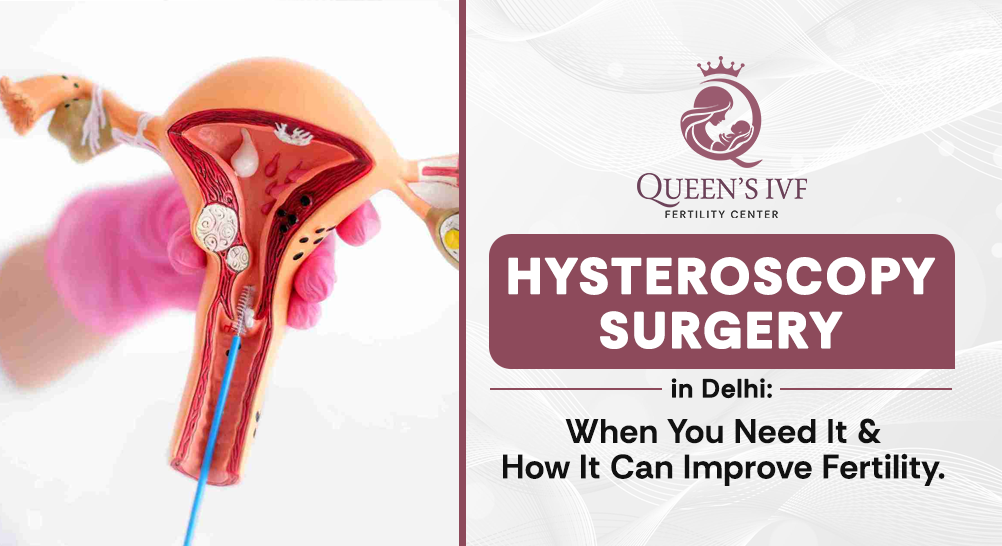
Many couples struggle to conceive despite having regular menstrual cycles and undergoing multiple fertility treatments. In some cases, the underlying problem lies inside the uterus and cannot be detected through routine scans alone. Conditions such as uterine polyps, fibroids, adhesions, or a uterine septum can affect implantation and pregnancy outcomes.
This is where hysteroscopy surgery plays an important role. It is a minimally invasive procedure that allows fertility specialists to examine the inside of the uterus and, when required, treat abnormalities during the same procedure.
If you are looking for hysteroscopy surgery in Delhi, understanding when it is recommended and how it supports fertility can help you make informed decisions. At Queens IVF Clinic, Dr. Priya Shukla, Senior Consultant and Medical Director, offers advanced diagnostic and operative hysteroscopy as part of personalised fertility treatment plans.
What Is Hysteroscopy?
Hysteroscopy is a minimally invasive procedure in which a thin, lighted instrument called a hysteroscope is gently inserted through the cervix into the uterus. This enables the fertility specialist to directly examine the uterine cavity without making any abdominal incisions.
The procedure may be performed for diagnostic purposes to identify abnormalities or as an operative procedure to remove or correct conditions affecting fertility and reproductive health.
Why Is Hysteroscopy Performed?
Hysteroscopy helps diagnose and treat several uterine conditions that may interfere with conception or pregnancy.
Your fertility specialist may recommend hysteroscopy if you have:
Difficulty conceiving naturally
Recurrent miscarriages
Repeated IVF implantation failure
Abnormal uterine bleeding
Irregular menstrual cycles
Uterine polyps
Submucosal fibroids
Intrauterine adhesions (Asherman's syndrome)
Uterine septum or congenital uterine abnormalities
Retained pregnancy tissue
Suspected abnormalities seen on ultrasound
Because the procedure allows direct visualisation of the uterine cavity, it often provides more accurate information than imaging tests alone.
How Can Hysteroscopy Improve Fertility?
The uterus plays a vital role in embryo implantation and pregnancy. Even small abnormalities inside the uterine cavity can reduce the chances of successful conception.
Hysteroscopy may improve fertility by:
Removing uterine polyps that interfere with implantation
Treating submucosal fibroids that distort the uterine cavity
Dividing a uterine septum
Removing scar tissue or adhesions
Evaluating recurrent implantation failure before IVF
Improving the uterine environment for embryo implantation
For many women, correcting these issues can enhance the chances of achieving a healthy pregnancy. The suitability and expected benefit depend on the individual's diagnosis and overall fertility assessment.
Diagnostic vs Operative Hysteroscopy
Diagnostic Hysteroscopy
This procedure is performed to examine the inside of the uterus and identify possible abnormalities. It is often recommended before advanced fertility treatments or after recurrent pregnancy loss.
Operative Hysteroscopy
If abnormalities are detected, operative hysteroscopy allows the doctor to treat many conditions during the same procedure without requiring open surgery.
Common procedures include:
Polyp removal
Fibroid removal
Adhesion removal
Septum correction
Removal of retained tissue
When Is Hysteroscopy Recommended Before IVF?
Many fertility specialists recommend hysteroscopy before IVF in selected cases, particularly when:
Previous IVF cycles have failed
Ultrasound suggests uterine abnormalities
There is a history of recurrent miscarriages
Persistent abnormal bleeding is present
Endometrial abnormalities are suspected
Evaluating the uterine cavity before embryo transfer helps ensure the uterus is in the best possible condition for implantation.
What Happens During the Procedure?
A hysteroscopy is usually performed as a day-care procedure.
The typical steps include:
Initial consultation and evaluation
Pre-procedure investigations if required
Administration of anaesthesia or sedation when appropriate
Insertion of the hysteroscope through the cervix
Examination of the uterine cavity
Treatment of any identified abnormalities, if planned
Short recovery period before discharge
Since there are no external incisions, recovery is generally quicker than with traditional surgery.
Recovery After Hysteroscopy
Most women can return home the same day.
You may experience:
Mild cramping
Light vaginal spotting
Temporary pelvic discomfort
These symptoms usually resolve within a few days. Your doctor will advise when you can resume normal activities, exercise, and attempt to conceive or begin fertility treatment.
Is Hysteroscopy Safe?
Hysteroscopy is considered a safe and commonly performed gynaecological procedure when carried out by experienced specialists.
Like any medical procedure, there are potential risks, although serious complications are uncommon. Your doctor will discuss the benefits, possible risks, and whether hysteroscopy is appropriate for your condition before proceeding.
Benefits of Hysteroscopy
Some of the advantages include:
Minimally invasive procedure
No abdominal cuts or stitches
Accurate diagnosis of uterine abnormalities
Ability to diagnose and treat in the same sitting
Faster recovery
Minimal hospital stay
Supports fertility evaluation and treatment planning
Why Choose Queens IVF Clinic for Hysteroscopy Surgery in Delhi?
At Queens IVF Clinic, hysteroscopy is performed using modern technology and evidence-based treatment protocols. The clinic offers comprehensive fertility evaluation along with advanced reproductive procedures under one roof.
Patients benefit from:
Personalised fertility assessment
Advanced hysteroscopic equipment
Diagnostic and operative hysteroscopy
IVF and infertility management
Experienced fertility specialists and embryology support
Patient-focused counselling and follow-up care
Every treatment plan is tailored to the individual's reproductive goals and medical history.
Meet Dr. Priya Shukla
Dr. Priya Shukla, Senior Consultant and Medical Director at Queens IVF Clinic, has extensive experience in fertility treatment and minimally invasive gynaecological procedures. She specialises in managing complex infertility cases through personalised treatment strategies, including hysteroscopy, IVF, IUI, and advanced reproductive techniques.
Her patient-centred approach focuses on identifying the underlying cause of infertility and recommending the most appropriate treatment based on clinical findings.
Frequently Asked Questions
Is hysteroscopy painful?
The procedure is generally performed under anaesthesia or appropriate sedation, so most patients experience minimal discomfort during the procedure. Mild cramping afterward is common and usually temporary.
How long does hysteroscopy take?
Most hysteroscopy procedures are completed within 15 to 45 minutes, depending on whether it is diagnostic or operative.
Can hysteroscopy improve IVF success?
If uterine abnormalities such as polyps, fibroids, or adhesions are affecting implantation, treating them through hysteroscopy may improve the uterine environment before IVF. The outcome depends on the individual's overall fertility profile.
How soon can I try to conceive after hysteroscopy?
The timing varies depending on the procedure performed and your recovery. Your fertility specialist will recommend when it is safe to begin trying naturally or proceed with fertility treatment.
Is hospital admission required?
Most hysteroscopy procedures are performed as day-care surgeries, allowing patients to return home on the same day.
Final Thoughts
A healthy uterus is essential for successful implantation and pregnancy. If you have experienced recurrent miscarriages, repeated IVF failures, abnormal bleeding, or difficulty conceiving, hysteroscopy may help identify and treat conditions that routine imaging can miss.
If you are considering hysteroscopy surgery in Delhi, consulting an experienced fertility specialist can help determine whether this minimally invasive procedure is right for you. At Queens IVF Clinic, Dr. Priya Shukla and her team provide comprehensive fertility evaluation and advanced hysteroscopic care designed to support your journey toward parenthood with personalised treatment and compassionate guidance.