

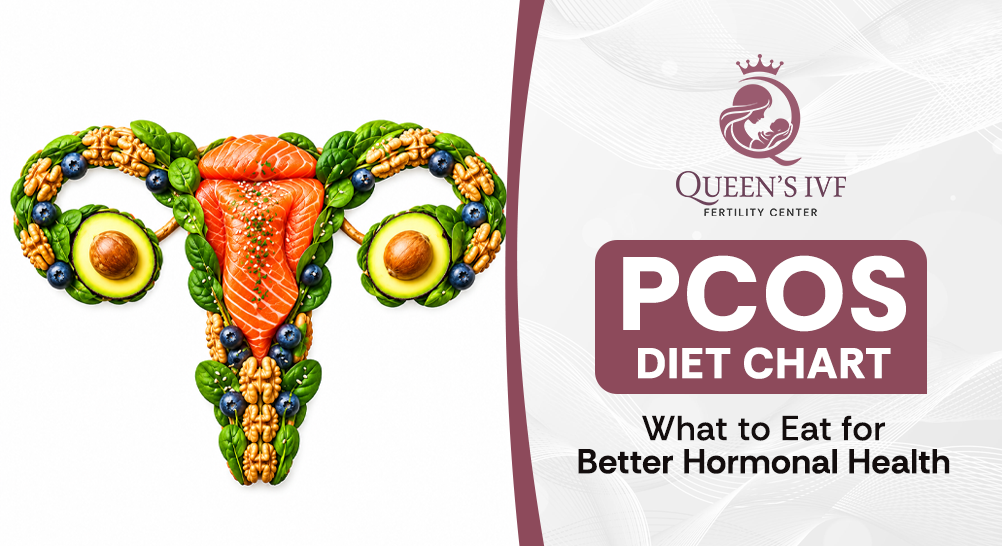
A well-planned PCOS diet chart focuses on improving insulin sensitivity, supporting metabolic health and maintaining a healthy body weight. Rather than following restrictive diets or eliminating entire food groups, women with PCOS benefit from balanced meals containing adequate protein, fibre, healthy fats and complex carbohydrates.
At Queens IVF, dietary and lifestyle considerations are an important part of understanding reproductive health. A personalised nutrition plan, alongside appropriate medical evaluation, can help women manage PCOS symptoms and address fertility-related concerns.
How Does Diet Affect PCOS and Hormonal Health?
Insulin resistance is frequently associated with PCOS. When the body's cells respond less effectively to insulin, the pancreas may produce more insulin to maintain normal blood glucose levels. Higher insulin levels can contribute to increased androgen production in the ovaries, potentially affecting follicular development and ovulation.
This is why dietary management is an important component of PCOS care. Choosing foods that provide sustained energy, adequate protein and dietary fibre can support glucose regulation and metabolic health.
A balanced diet may help with:
Supporting insulin sensitivity and blood glucose regulation.
Managing excess body weight, where applicable.
Supporting regular ovulatory function.
Improving lipid and metabolic health.
Reducing the risk of long-term metabolic complications.
However, diet alone does not cure PCOS. Medical assessment and treatment may also be necessary depending on symptoms, metabolic health and fertility goals.
PCOS Diet Chart: What Should You Eat Throughout the Day?
A practical diet chart for PCOS patient should include regular meals with a combination of protein, fibre-rich carbohydrates and healthy fats. Indian food preferences can easily be accommodated without relying on expensive or specialised ingredients.
The following sample PCOS food chart provides a balanced daily meal structure.
Meal | Recommended Food Options |
|---|---|
Early | 1 glass of water, 4–5 soaked almonds and 1–2 walnuts |
Breakfast | Vegetable besan chilla with curd OR 2 boiled eggs with whole-wheat toast |
Mid-Morning | 1 whole fruit such as apple, guava, orange or papaya |
Lunch | 1–2 whole-wheat rotis OR a moderate portion of brown rice, dal, seasonal vegetables, salad and curd |
Evening Snack | Roasted chana, sprouts chaat or unsweetened Greek yoghurt |
Dinner | Grilled paneer, tofu, chicken or fish with sautéed vegetables and 1–2 rotis |
Before Bed | 1 glass of unsweetened milk, if preferred and tolerated |
This sample PCOS Indian diet plan can be modified according to individual calorie requirements, food preferences, activity levels and metabolic health.
1. Include High-Fibre Foods
Dietary fibre slows the absorption of carbohydrates and supports better post-meal blood glucose regulation. Women with PCOS can include oats, whole wheat, barley, lentils, chickpeas, beans, broccoli, spinach and other non-starchy vegetables.
Whole fruits are preferable to fruit juices because they retain their fibre content.
2. Choose Protein-Rich Foods
Protein supports muscle maintenance, improves satiety and helps create balanced meals. Include eggs, paneer, tofu, chicken, fish, lentils, chickpeas, kidney beans and unsweetened yoghurt.
Adding protein to breakfast is particularly useful for avoiding meals that consist almost entirely of refined carbohydrates.
3. Include Healthy Fats
Healthy fats contribute to overall metabolic and reproductive health. Include walnuts, almonds, flaxseeds, chia seeds, pumpkin seeds and moderate quantities of mustard, groundnut or olive oil.
These foods provide unsaturated fats and other nutrients that support a balanced dietary pattern.
4. Prefer Complex Carbohydrates
Women with PCOS do not need to eliminate carbohydrates completely. Instead, choose whole grains and minimally processed carbohydrate sources such as oats, millets, whole-wheat roti, quinoa and brown rice.
Combining carbohydrates with protein, vegetables and healthy fats can improve overall meal quality and help regulate post-meal glucose responses.
PCOS Diet Chart for Weight Loss: Foods to Limit
Weight management can be beneficial for women with PCOS who have excess body weight, particularly when abdominal adiposity and insulin resistance are present. However, weight loss is not necessary for every woman with PCOS, and healthy lifestyle changes offer benefits even without weight reduction.
A PCOS diet chart for weight loss should focus on sustainable dietary changes rather than crash diets or excessive calorie restriction.
Consider limiting:
Refined carbohydrates: White bread, biscuits, pastries and foods made primarily with refined flour.
Sugary beverages: Packaged juices, soft drinks, sweetened tea and energy drinks.
Highly processed foods: Packaged snacks, processed meats and frequent fast-food consumption.
Added sugars: Sweets, desserts and sugar-rich breakfast cereals.
Excessive fried foods: Regular consumption of deep-fried snacks and foods high in saturated fats.
There is no universal requirement to eliminate dairy, gluten, rice or particular fruits unless an individual has a diagnosed intolerance or another medical reason.
Best Diet Plan for PCOS: Important Lifestyle Considerations
The best diet plan for PCOS is one that is nutritionally adequate, sustainable and suited to an individual's health requirements.
Alongside dietary changes, the following habits can support PCOS management:
Regular physical activity: Aim for a combination of aerobic exercise and resistance training. Walking, cycling, swimming and strength training can support metabolic health.
Consistent sleep: Maintain a regular sleep schedule and aim for approximately 7–9 hours of sleep each night.
Meal consistency: Avoid routinely skipping meals if it leads to excessive hunger or overeating later in the day.
Weight management: If weight reduction is clinically appropriate, a moderate calorie deficit based on individual requirements is preferable to restrictive dieting.
Importantly, the 2023 International Evidence-Based PCOS Guideline does not recommend one specific dietary composition over another. Sustainable, individualised healthy eating is the recommended approach.
When Should Women with PCOS Seek Medical Advice?
Dietary management is an important part of PCOS care, but certain symptoms require clinical evaluation by a gynaecologist or fertility specialist. Women should seek medical advice if they experience:
Irregular or missed periods: Frequent menstrual irregularities or prolonged gaps between periods may indicate ovulatory dysfunction.
Excessive hair growth: Increased facial or body hair can be associated with elevated androgen levels.
Persistent acne or hair thinning: Ongoing acne, scalp hair thinning or other hormonal symptoms may require further assessment.
Difficulty conceiving: Women experiencing difficulty getting pregnant may need an evaluation of ovulation and reproductive health.
Unexplained weight gain or metabolic concerns: Insulin resistance and other metabolic factors should be assessed where clinically indicated.
Understanding the underlying PCOS causes helps doctors determine an appropriate treatment approach. Depending on individual symptoms and reproductive goals, management may include:
Menstrual cycle regulation.
Medical management of insulin resistance.
Ovulation induction for women planning pregnancy.
Fertility evaluation and assisted reproductive treatment, where required.
For women planning pregnancy, an early fertility consultation can help assess ovulation, reproductive health and the need for further intervention. Those requiring assisted reproductive care can also explore IVF treatment in South Delhi and consult the specialists at Queens IVF.
Take the Next Step Towards Better Reproductive Health with Queens IVF
Managing PCOS requires more than following a generic diet chart. It involves understanding hormonal patterns, metabolic health, menstrual regularity and individual reproductive goals.
A personalised PCOS diet chart for weight loss or hormonal health can support overall well-being, but persistent symptoms and fertility concerns require appropriate medical attention.
At Queens IVF, women can seek professional guidance for PCOS-related fertility concerns, understand their treatment options and receive support based on their reproductive health needs.
Book a consultation with Queens IVF today to discuss your PCOS symptoms and take an informed step towards better hormonal and reproductive health.
Frequently Asked Questions About PCOS Diet
1. What is the best diet for PCOS patients?
A balanced diet containing whole grains, vegetables, fruits, lean proteins, legumes, nuts and healthy fats is recommended. The ideal dietary pattern should be tailored to individual nutritional requirements and metabolic health.
2. Can a PCOS diet chart help with weight loss?
Yes. A structured PCOS diet chart can support weight management by improving meal quality, increasing fibre and protein intake and controlling overall calorie consumption. Weight loss should be gradual and medically appropriate.
3. Which Indian foods are good for PCOS?
Besan chilla, moong dal, sprouts, paneer, curd, eggs, whole-wheat roti, millets, vegetables, chickpeas and seasonal fruits are useful options. Combining protein with fibre-rich carbohydrates helps create balanced meals.
4. Which foods should be avoided in PCOS?
Limit frequent consumption of sugary beverages, refined flour products, sweets, packaged snacks and highly processed foods. Complete elimination of carbohydrates or dairy is generally unnecessary unless medically indicated.
5. Can PCOS patients eat rice and roti?
Yes. Women with PCOS can eat both rice and roti. Portion sizes, food quality and meal composition matter. Pairing rice or roti with dal, vegetables, curd and a protein source can improve overall nutritional balance.
6. How many meals should a woman with PCOS eat daily?
There is no medically established ideal number of meals for every woman with PCOS. Three balanced meals with one or two nutritious snacks may work well, depending on appetite, activity levels and individual dietary needs.
7. Can PCOS be managed through diet without medication?
Diet and lifestyle modifications can improve metabolic health and help manage some PCOS symptoms. However, they may not address every hormonal or reproductive concern. Some women require medication or other medical interventions depending on their clinical condition.
8. Can women with PCOS get pregnant naturally?
Yes. Many women with PCOS conceive naturally, although irregular ovulation can make conception more difficult. If pregnancy does not occur or periods are significantly irregular, consulting a fertility specialist can help identify appropriate treatment options.