

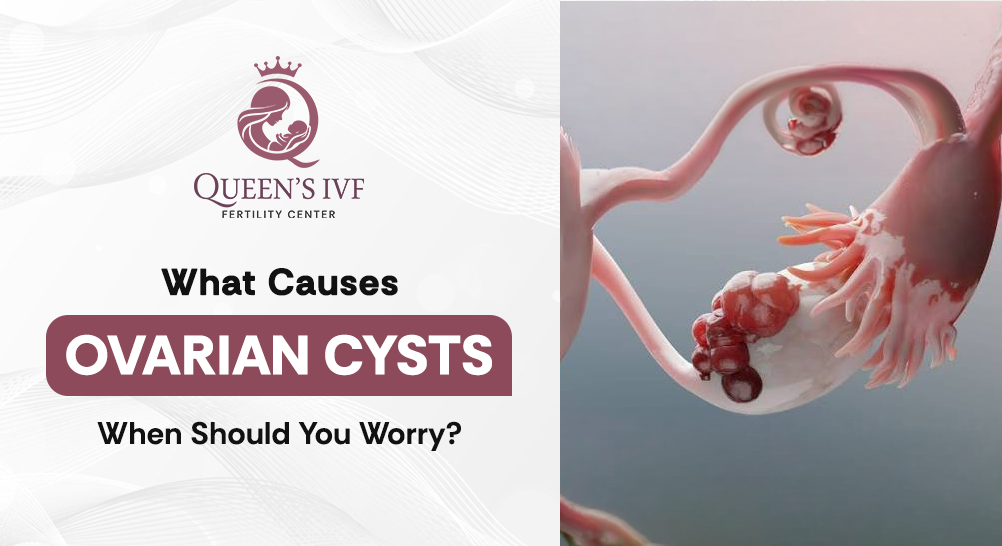
Ovarian cysts are fluid-filled sacs that develop in or on the ovaries. They are common, especially in women during their reproductive years. Many ovarian cysts are harmless and disappear on their own without treatment.
However, some cysts can become large, cause pain, affect periods, or lead to complications. Understanding the ovarian cysts causes, types, symptoms, and treatment options can help you know when to seek medical advice.
If you have been diagnosed with an ovarian cyst, it does not always mean that you need surgery or fertility treatment. A gynecologist can evaluate the cyst and recommend the right approach based on your individual condition.
What Causes Ovarian Cysts?
There are several ovarian cysts causes, and they can vary depending on the type of cyst. Many ovarian cysts develop as part of the normal menstrual cycle, while others may be linked to conditions such as endometriosis, polycystic ovary syndrome (PCOS), hormonal changes, or abnormal cell growth. Most ovarian cysts are benign and may resolve on their own, but some can cause symptoms or require medical evaluation. Understanding the type and underlying cause of an ovarian cyst can help determine whether monitoring or treatment is needed.
Hormonal Changes
Hormonal changes during the menstrual cycle are one of the most common reasons ovarian cysts develop. During ovulation, a small sac called a follicle grows and releases an egg. Sometimes, the follicle does not release the egg or does not shrink after ovulation. It can continue to grow and form a cyst.
Endometriosis
Endometriosis can cause a type of ovarian cyst called an endometrioma. It develops when tissue similar to the lining of the uterus grows on the ovary. These cysts may cause pelvic pain, painful periods, and sometimes fertility problems.
Polycystic Ovary Syndrome
Women with PCOS may have multiple small follicles in their ovaries due to hormonal and ovulation-related changes. However, PCOS and ovarian cysts are not the same condition. The small follicles associated with PCOS are different from ovarian cysts that may require treatment.
Abnormal Cell Growth
Some ovarian cysts develop because of abnormal cell growth. Most are benign, but some may require further testing or treatment depending on their appearance and other findings.
What Are the Types of Ovarian Cysts?
There are different types of ovarian cysts, and each may require a different approach.
Functional cysts: These are linked to the menstrual cycle and often disappear without treatment.
Follicular cysts: These occur when a follicle does not release an egg as expected.
Corpus luteum cysts: These can form after ovulation when the corpus luteum fills with fluid.
Endometriomas: These are linked to endometriosis and may affect fertility in some women.
Dermoid cysts: These can contain different types of tissue and are usually benign.
Cystadenomas: These develop from the surface of the ovary and can sometimes become large.
An ultrasound can help your doctor understand the type and appearance of the cyst.
What Is the Normal Size of an Ovarian Cyst?
Many people search for the normal size of ovarian cysts, but there is no single size that is considered normal for every cyst.
Doctors look at more than size when deciding whether a cyst needs treatment. They may consider:
The size of the cyst
Its appearance on ultrasound
Whether it contains fluid or solid areas
Your age and menstrual status
Your symptoms
Whether the cyst is growing
Your fertility plans
Small, simple cysts are often monitored, especially in women who are still having periods. Some disappear naturally within a few weeks or months.
A large cyst does not automatically mean that it is dangerous. However, a persistent or unusual cyst should be evaluated by a doctor.
What Symptoms Can Ovarian Cysts Cause?
Many ovarian cysts do not cause any symptoms and are discovered during a routine ultrasound.
When symptoms occur, they may include:
Pelvic or lower abdominal pain
Pain on one side of the abdomen
Bloating or a feeling of fullness
Irregular or heavy periods
Frequent urination
Difficulty passing stools in some cases
Symptoms can vary depending on the size, type, and location of the cyst.
When Should You Worry About an Ovarian Cyst?
Most ovarian cysts are not emergencies. However, certain symptoms should not be ignored.
Seek urgent medical attention if you experience:
Sudden and severe abdominal or pelvic pain
Severe pain with vomiting
Fainting or extreme weakness
Dizziness with severe abdominal pain
Heavy or unusual bleeding
Severe pain with fever
These symptoms may occur when a cyst ruptures or causes the ovary to twist. Both situations require prompt medical evaluation.
How Are Ovarian Cysts Diagnosed?
Your doctor may ask about your symptoms, menstrual cycle, medical history, and pregnancy plans. A pelvic ultrasound is commonly used to examine the ovaries.
An ultrasound can show:
The size of the cyst
Its location
Whether it is filled with fluid
Whether it has solid areas
Changes in the ovaries
Depending on your symptoms and ultrasound findings, your doctor may recommend additional tests or a follow-up scan.
Ovarian Cysts Treatment Options
The right ovarian cysts treatment depends on the type, size, symptoms, age, and other health factors.
Monitoring
Many functional cysts disappear on their own. In such cases, your doctor may recommend observation and a repeat ultrasound after some time.
Medicines
Medicines may be prescribed to manage pain or other symptoms. Hormonal medicines may sometimes be used to reduce the formation of new functional cysts, although they do not necessarily remove an existing cyst.
Surgery
Surgery may be recommended when a cyst is very large, continues to grow, causes significant symptoms, does not disappear, or has unusual features.
The type of surgery depends on the cyst and your individual situation. Your doctor will discuss the treatment options and possible risks before recommending a procedure.
How to Cure Ovarian Cysts Naturally?
Many women search for how to cure ovarian cysts at home. However, there is no proven home remedy that can remove every type of ovarian cyst.
Some functional cysts disappear naturally because they are related to the menstrual cycle. Instead of relying on unproven remedies, it is better to follow your doctor's advice, attend recommended follow-up scans, maintain a balanced lifestyle, and take prescribed medicines as directed.
If you have persistent pain or a large or complex cyst, consult a gynecologist.
Can Ovarian Cysts Affect Fertility?
Having an ovarian cyst does not automatically mean that you will have difficulty becoming pregnant. Many women with ovarian cysts conceive naturally.
However, certain conditions, especially endometriosis, can affect fertility. Previous ovarian surgery or some types of cysts may also need to be considered when planning pregnancy.
If you are trying to conceive and have an ovarian cyst, a fertility specialist can evaluate your ovarian health and other factors that may affect pregnancy.
If you are searching for a fertility center in Delhi or an IVF clinic near me, a proper fertility evaluation should be the first step. IVF is not automatically required just because you have an ovarian cyst.
Ovarian Cysts Treatment in Delhi
If you have pelvic pain, an ovarian cyst that is not going away, or an abnormal ultrasound report, consulting a gynecologist is an important first step.
For women looking for ovarian cysts treatment in Delhi, treatment should be based on the type and condition of the cyst rather than using the same approach for everyone.
If you are also planning a pregnancy, tell your doctor about your fertility goals. This helps the doctor consider both your current condition and future pregnancy plans when discussing treatment.
Why Choose Queens IVF for Ovarian Cysts?
At Queens IVF, ovarian cysts are evaluated based on the patient's symptoms, cyst type, size, medical history, and fertility goals. The aim is to understand whether monitoring, medicines, or further treatment may be appropriate for the individual patient.
If you are also planning a pregnancy, the team can assess whether the cyst may affect your fertility and guide you about the next steps. This can be helpful for women looking for a fertility center in Delhi and wanting their ovarian health and fertility plans to be considered together.
Before recommending fertility treatment, a proper evaluation is carried out to understand the individual's condition and treatment needs.
Why Choose Dr. Priya Shukla for Ovarian Cysts Treatment?
Dr. Priya Shukla focuses on understanding the patient's symptoms, medical history, and ultrasound findings before suggesting a treatment plan.
For ovarian cysts, the evaluation may include reviewing the cyst's size and appearance, menstrual history, symptoms, and fertility goals.
Every ovarian cyst does not require the same treatment. Depending on the individual case, Dr. Priya Shukla can explain whether the cyst needs monitoring, medical management, or further evaluation.
For women concerned about both ovarian cysts and fertility, consulting a gynecologist can help them better understand their condition and available treatment options.
Conclusion
Ovarian cysts are common, and many are harmless. They can develop because of normal hormonal changes, endometriosis, and other conditions.
The type and size of the cyst, along with your symptoms and medical history, help determine whether treatment is needed. Some cysts disappear without treatment, while others may need medicines, monitoring, or surgery.
If you have sudden severe pain, vomiting, fainting, fever, or heavy bleeding, seek medical attention promptly. If you have a persistent cyst or are concerned about fertility, consult a gynecologist or fertility specialist for proper evaluation.
Frequently Asked Questions
1. What are the main causes of ovarian cysts?
Ovarian cysts can develop due to hormonal changes during ovulation, endometriosis, PCOS-related changes, or abnormal cell growth. The exact cause depends on the type of cyst.
2. What is the normal size of an ovarian cyst?
There is no single normal size for every ovarian cyst. Doctors consider its size, appearance, symptoms, age, and whether it is growing when deciding whether treatment or monitoring is needed.
3. Can ovarian cysts go away on their own?
Yes. Many functional ovarian cysts disappear naturally within a few weeks or months. However, persistent or unusual cysts should be evaluated by a doctor.
4. Can ovarian cysts affect fertility?
Some ovarian cysts do not affect fertility. However, conditions such as endometriosis may affect the ability to conceive. A fertility specialist can assess your individual situation.
5. When should I seek treatment for an ovarian cyst?
You should consult a doctor if a cyst causes persistent pain, grows in size, does not disappear, or has unusual features on an ultrasound. Sudden severe pain, vomiting, fainting, fever, or heavy bleeding requires urgent medical attention.