

Hysteroscopy allows a fertility specialist to examine the inside of the uterus and identify problems that may affect implantation or pregnancy. In some cases, the identified problem can also be treated during the same procedure.
At Queens IVF, Dr. Priya Shukla evaluates whether hysteroscopy is appropriate based on a woman’s medical history, fertility investigations, symptoms, and previous treatment outcomes. The procedure is not required for every woman experiencing infertility. It is generally considered when there is a specific reason to examine the uterine cavity, such as suspected polyps, fibroids, adhesions, uterine abnormalities, recurrent miscarriages, or certain fertility treatment concerns.
What Is Hysteroscopy Surgery?
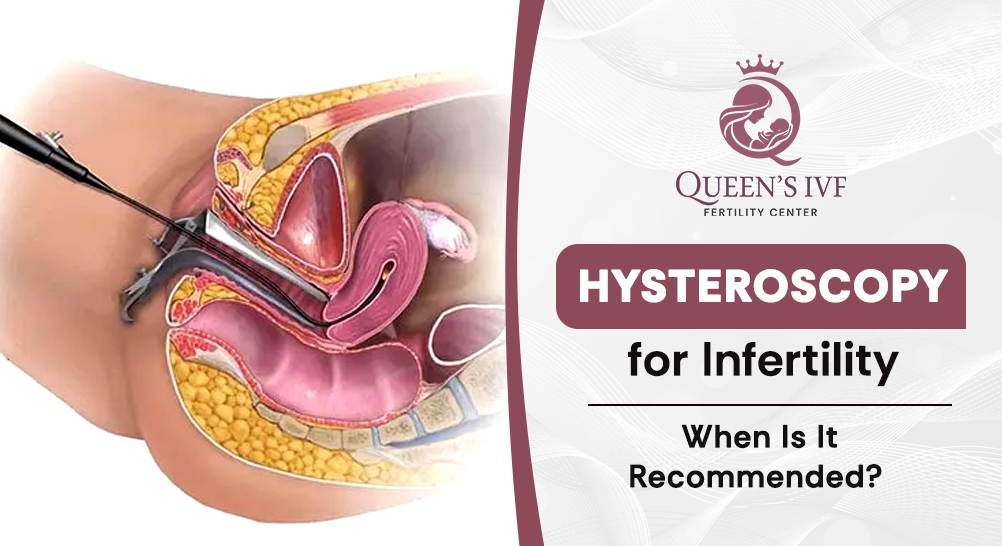
Hysteroscopy surgery is a minimally invasive procedure used to examine the inside of the uterus.
During the hysteroscopy procedure, a thin instrument called a hysteroscope, which has a light and camera, is gently passed through the vagina and cervix into the uterus. This allows the fertility specialist to view the uterine cavity on a screen without making cuts on the abdomen.
Depending on the findings and the purpose of the procedure, hysteroscopy can be:
Diagnostic hysteroscopy: Used mainly to examine the uterus and identify abnormalities.
Operative hysteroscopy: Used to treat certain problems, such as removing a polyp, selected fibroids, or scar tissue.
This means that in selected cases, diagnosis and treatment can be performed during the same procedure.
What Is a Hysteroscopy Test Used For in Infertility?
A hysteroscopy test provides a detailed view of the uterine cavity when other fertility investigations suggest that there may be a problem inside the uterus.
Some abnormalities may not be clearly diagnosed through routine examinations alone. Hysteroscopy can help identify problems affecting the shape or lining of the uterine cavity.
During a fertility evaluation, Dr. Priya Shukla may consider hysteroscopy when there is:
Difficulty getting pregnant without a clear explanation
Repeated miscarriages
Suspected uterine polyps
Fibroids that project into the uterine cavity
Intrauterine adhesions or scar tissue
A suspected uterine septum or other cavity abnormality
Abnormal findings on ultrasound or other fertility investigations
Certain problems with embryo implantation
However, hysteroscopy is not automatically required for every infertility patient. The decision is based on the individual’s medical history, symptoms, investigation results, and fertility treatment plan.
When Is Hysteroscopy Recommended for Infertility?
At Queens IVF, hysteroscopy is considered when there is a reasonable possibility that a problem inside the uterus may be affecting fertility. Dr. Priya Shukla may recommend the procedure after reviewing relevant investigations and assessing the overall fertility history.
1. Suspected Uterine Polyps
Uterine polyps are small growths that develop from the lining of the uterus. Depending on their size and location, they may interfere with the uterine cavity and potentially affect fertility.
If a polyp is suspected on an ultrasound or other examination, hysteroscopy can provide a direct view of the uterine cavity. When appropriate, the polyp can also be removed during the procedure.
2. Submucosal Fibroids
Some fibroids grow toward or into the uterine cavity. These are called submucosal fibroids.
When these fibroids affect the uterine cavity, hysteroscopy procedure may be used to assess and remove them in suitable cases. Not all fibroids can be treated through hysteroscopy. Fibroids located mainly within the uterine muscle or on the outer surface may require a different treatment approach.
3. Intrauterine Adhesions
Scar tissue inside the uterus, sometimes called intrauterine adhesions or Asherman’s syndrome, can change the shape of the uterine cavity.
Hysteroscopy allows the fertility specialist to directly examine these adhesions and, when appropriate, treat them to restore the uterine cavity.
4. Recurrent Miscarriages
Women who experience repeated pregnancy loss may require an evaluation of the uterus to identify possible structural abnormalities.
If a structural problem inside the uterine cavity is suspected, a hysteroscopy test may form part of the overall evaluation. Dr. Priya Shukla considers the woman’s pregnancy history and investigation findings before deciding whether hysteroscopy is appropriate.
5. Abnormal Uterine Findings
If an ultrasound or another fertility investigation shows something unusual inside the uterus, hysteroscopy may provide a clearer view of the uterine cavity.
For example, it can help investigate suspected:
Polyps
Submucosal fibroids
Adhesions
Uterine septum
Other abnormalities within the uterine cavity
A direct examination can help determine whether the finding requires treatment and whether treatment can be performed during the same procedure.
6. Selected IVF or Embryo Implantation Cases
In some women undergoing IVF, hysteroscopy may be considered when there is a specific concern about the uterine cavity, such as an abnormal scan or previous implantation problems.
However, routine hysteroscopy before IVF is not necessary for everyone. Evidence about whether screening hysteroscopy improves live-birth outcomes in all women undergoing IVF remains uncertain. For this reason, Dr. Priya Shukla assesses the individual fertility history and uterine findings before including hysteroscopy in an IVF treatment plan.
How Is the Hysteroscopy Procedure Performed?
The exact process depends on whether the procedure is diagnostic or operative.
Generally, the hysteroscopy procedure involves the following steps:
Initial evaluation: Dr. Priya Shukla reviews the medical history, symptoms, fertility investigations, and previous scans.
Preparation: Instructions may be provided regarding eating, drinking, medicines, and the timing of the procedure.
Insertion of the hysteroscope: A thin camera is gently passed through the vagina and cervix into the uterus.
Examination: The uterine cavity is examined using the camera to identify any abnormalities.
Treatment if required: If a suitable problem is identified, abnormalities such as polyps, adhesions, or selected fibroids may be treated during the procedure.
Recovery: Depending on the type of procedure and anesthesia used, the patient may be able to return home on the same day.
The procedure may be performed with different forms of anesthesia depending on the type of hysteroscopy and the individual’s clinical needs.
Is Hysteroscopy Painful?
The experience can vary from person to person.
Some women may experience mild cramping or discomfort, particularly with diagnostic hysteroscopy. For operative procedures, anesthesia or sedation may be used to improve comfort.
Before the procedure, Dr. Priya Shukla can explain the planned approach and the type of anesthesia or sedation that may be appropriate based on the procedure and individual requirements.
What Are the Benefits of Hysteroscopy for Infertility?
One of the main advantages of hysteroscopy is that it provides a direct view of the inside of the uterus.
Depending on the underlying condition, hysteroscopy may help:
Identify abnormalities inside the uterine cavity
Remove certain polyps
Treat selected submucosal fibroids
Remove intrauterine adhesions
Evaluate the uterus when other tests are inconclusive
Diagnose and treat some problems during the same procedure
However, the benefit depends on the underlying problem. Hysteroscopy itself is not a general treatment for all causes of infertility.
Recovery After Hysteroscopy
Recovery depends on whether the procedure was diagnostic or operative.
Some women may experience mild period-like cramps, spotting, or light bleeding for a few days. Many patients can return to their normal activities relatively quickly, although recovery may take longer after more extensive treatment.
At Queens IVF, post-procedure guidance is provided according to the type of hysteroscopy performed and the treatment carried out. Instructions may include when it is safe to resume exercise, sexual activity, and other normal activities.
Medical attention should be sought if symptoms such as the following occur:
Heavy bleeding
Severe or increasing abdominal pain
Fever or chills
Foul-smelling vaginal discharge
These symptoms should be evaluated because complications, although uncommon, can occur.
What Are the Risks of Hysteroscopy?
Hysteroscopy is generally considered a safe procedure, but like any medical procedure, it has some potential risks.
Possible complications may include:
Infection
Bleeding
Injury to the cervix or uterus
Fluid-related complications
Reaction to anesthesia
Formation of scar tissue in some cases
Serious complications are uncommon. Before treatment, Dr. Priya Shukla discusses the expected procedure, potential risks, and other relevant considerations so that the patient can make an informed decision.
How Much Does Hysteroscopy Cost?
Hysteroscopy costs can vary considerably depending on several factors, including:
Whether the procedure is diagnostic or operative
The complexity of the condition
Type of anesthesia used
Hospital or clinic charges
Doctor's fees
Whether additional treatment is performed during the procedure
Whether tissue needs to be sent for laboratory testing
Therefore, it is better to obtain a personalised estimate from the fertility clinic rather than relying on a fixed price.
If you are searching for Hysteroscopy treatment in Delhi, Queens IVF can provide information about the expected procedure, investigations, anesthesia, and other applicable charges following an individual evaluation.
Does Hysteroscopy Improve Fertility?
This is an important question, and the answer depends on why hysteroscopy is being performed.
If a problem such as a uterine polyp, cavity-distorting fibroid, or intrauterine adhesion is identified and appropriately treated, correcting that problem may support a healthier uterine environment.
However, hysteroscopy does not treat every cause of infertility. Fertility can also be affected by ovulation, egg quality, sperm factors, fallopian tube problems, age, endometriosis, and other conditions.
For this reason, hysteroscopy should be considered as part of an overall fertility evaluation rather than as a treatment for infertility itself. Evidence does not currently support performing screening hysteroscopy routinely in every infertility or IVF patient.
At Queens IVF, Dr. Priya Shukla considers hysteroscopy when the clinical history or fertility investigations indicate that examining the uterine cavity may provide useful information or allow treatment of a specific abnormality. If hysteroscopy is recommended, patients considering hysteroscopy surgery in Delhi can discuss the procedure, its benefits, and whether it is appropriate for their individual fertility needs with a specialist.
When Should You Talk to a Fertility Specialist?
If pregnancy has not occurred despite trying to conceive, if recurrent miscarriages have occurred, or if a uterine abnormality has been identified, a consultation with a fertility specialist can help determine the next appropriate step.
Dr. Priya Shukla can assess the available fertility investigations, medical history, and reproductive goals to determine whether imaging, a hysteroscopy test, or other fertility investigations may be appropriate.
For those looking for the best fertility clinic in Delhi, Queens IVF provides fertility evaluation and treatment based on individual clinical requirements.
Similarly, consultation with a qualified gynecologist in Delhi can help determine whether hysteroscopy is appropriate for specific symptoms, uterine findings, or fertility concerns.
Final Thoughts
Hysteroscopy surgery can be a valuable part of infertility evaluation when there is a suspected problem inside the uterus. It provides a direct view of the uterine cavity and, in selected cases, allows certain abnormalities to be treated during the same procedure.
At Queens IVF, Dr. Priya Shukla evaluates the need for hysteroscopy based on the individual’s medical history, fertility investigations, uterine findings, and treatment goals. The procedure is not routinely required for every woman experiencing infertility or undergoing IVF.
If hysteroscopy has been recommended, important questions include why the procedure is being considered, what condition is being investigated, whether treatment can be performed during the same procedure, what type of anesthesia may be used, and what recovery is likely to involve.
The appropriate fertility treatment depends on individual medical history, test results, and reproductive goals.
Frequently Asked Questions
1. Is hysteroscopy necessary for every woman with infertility?
No. Hysteroscopy is not routinely required for every woman experiencing infertility. It is generally recommended when there is a specific reason to examine or treat the uterine cavity.
2. Can hysteroscopy help with recurrent miscarriages?
It may help identify structural abnormalities inside the uterus that could contribute to recurrent pregnancy loss. Your doctor will decide whether it is appropriate based on your history and other test results.
3. Can polyps be removed during hysteroscopy?
Yes. When appropriate, polyps inside the uterine cavity can often be removed during operative hysteroscopy.
4. When should you visit a fertility center near me for hysteroscopy?
If you have infertility, recurrent miscarriages, abnormal uterine bleeding, or a suspected uterine abnormality, a fertility specialist may recommend hysteroscopy after evaluating your medical history and test results.
5. How long does it take to recover from hysteroscopy?
Recovery varies according to the type of procedure. Many women return to normal activities quickly after a straightforward hysteroscopy, while recovery may take longer after operative treatment.